Launch offer — valid today only

📄 Digital book in PDF · read it on your phone or print it

Your Borehole, Well or Spring and the UK Rules in Drawings One Topic on Every Page

Borehole headworks, pump sizing, the pressure switch, the vessel, sediment filters, UV, storage tanks, taking a sample and the rules for your nation. One topic per page, drawing first: when the pump clicks on and off or the UV beeps, you open the page and know where to look. 64 illustrated pages.

SHOW ME MY SUPPLY, PAGE BY PAGE

🔒 Secure checkout · PDF by email · 30-day guarantee

Every topic, its own pageEach part and each routine drawn, with the explanation alongside
64 illustrated pages8 parts, from the whole system on one page to the glossary at a glance
Up-to-date sourcesEach UK nation's private supply regulations and the drinking water regulators' published guidance
PDF by emailFormat

Look Inside the Book

Each page has one large drawing and a box with the numbers, settings and steps you need to know:

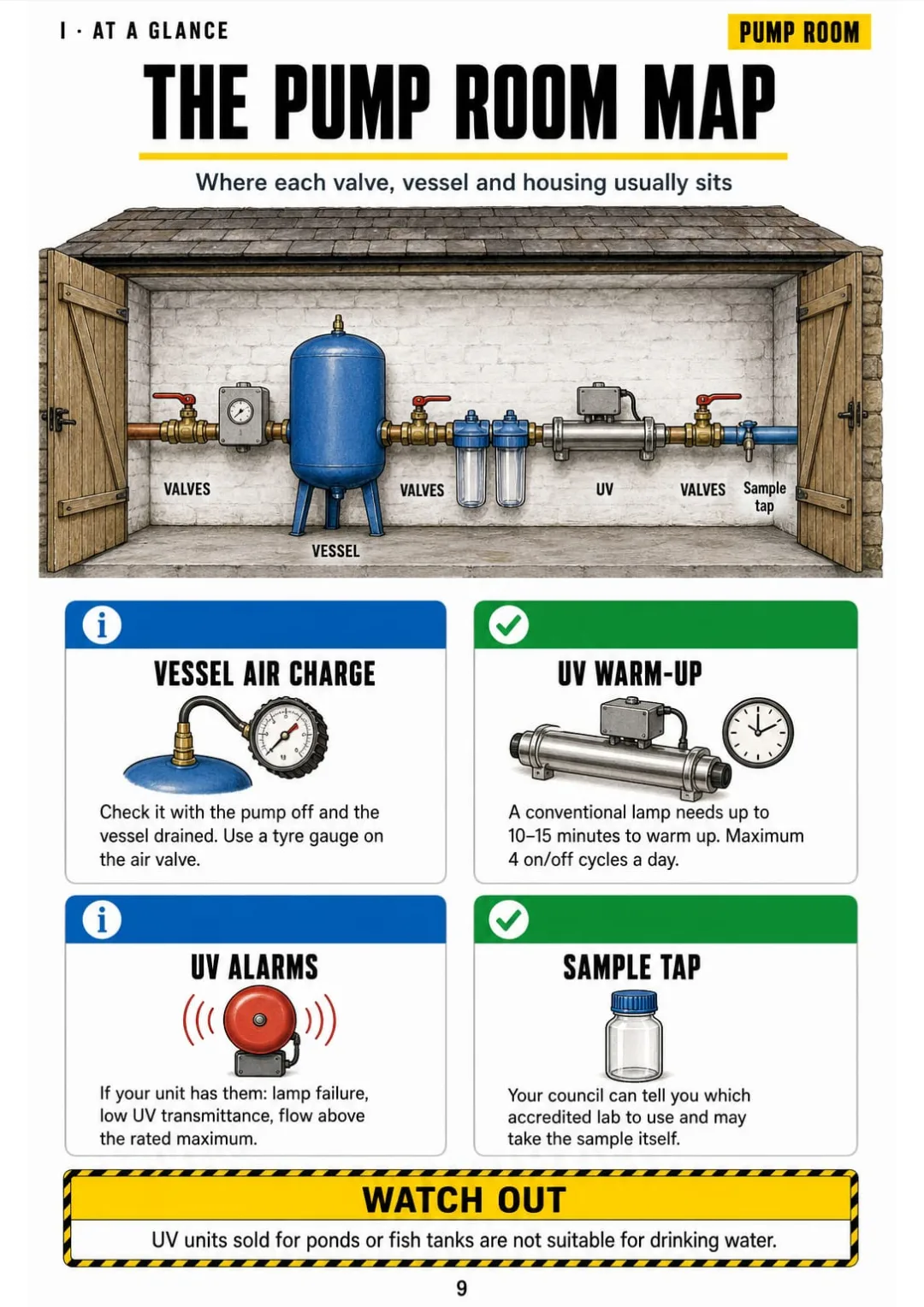
Valve, switch, gauge, vessel, filters, UV and sample tap: where each one sits.
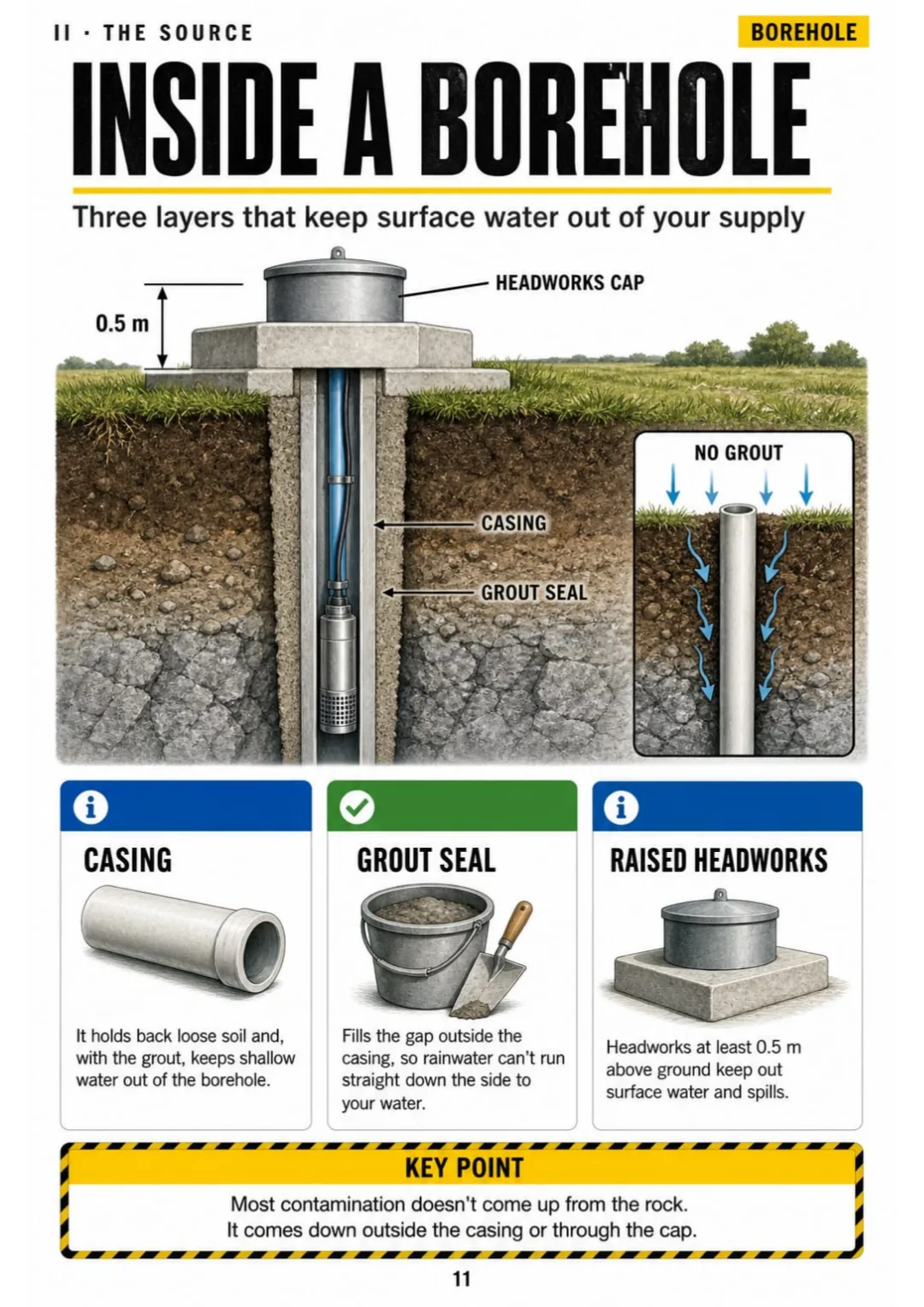
Borehole headworks at least 0.5 m above ground, with a grout seal around the casing.
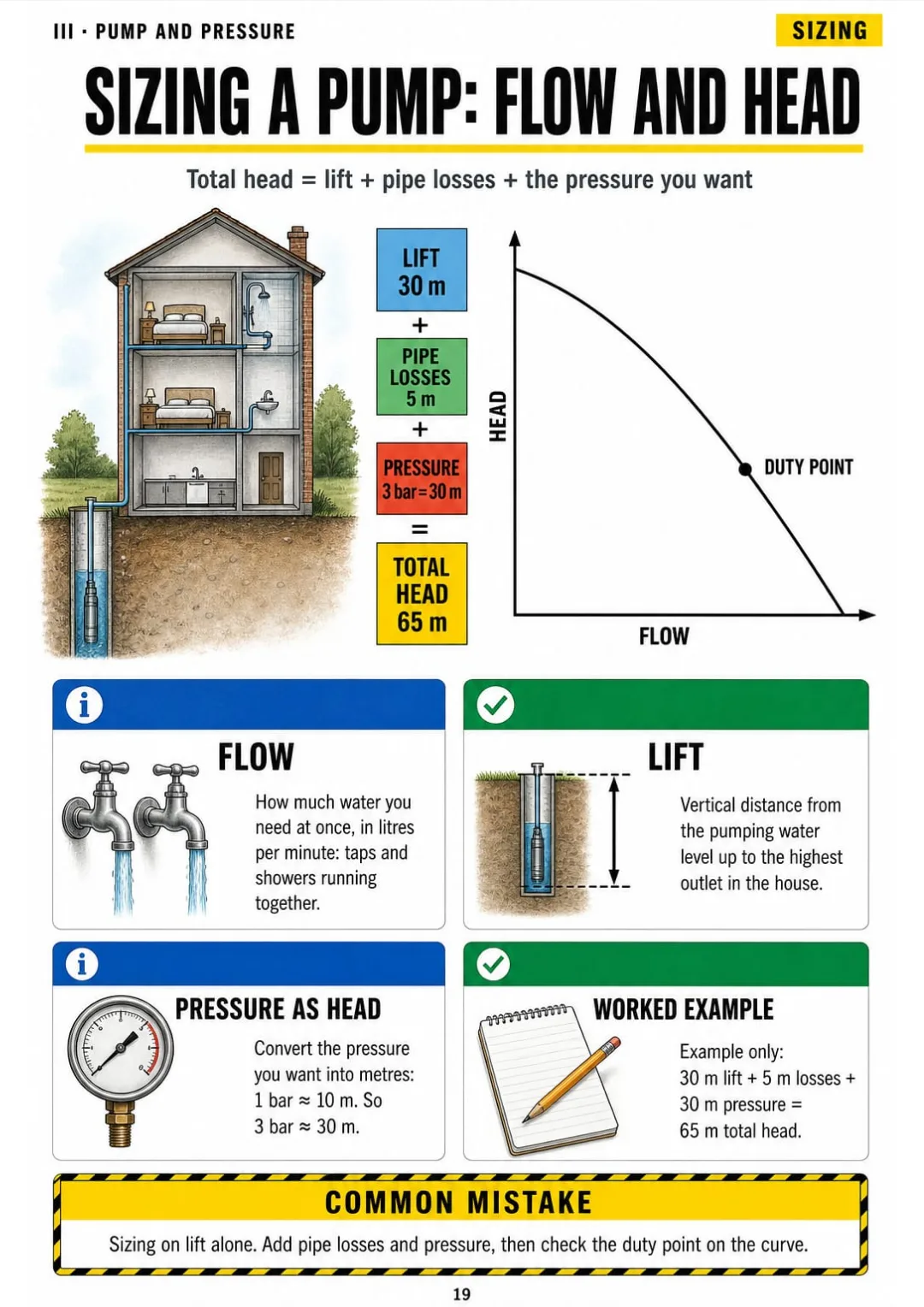
Total head is lift + pipe losses + pressure, with 1 bar ≈ 10 m
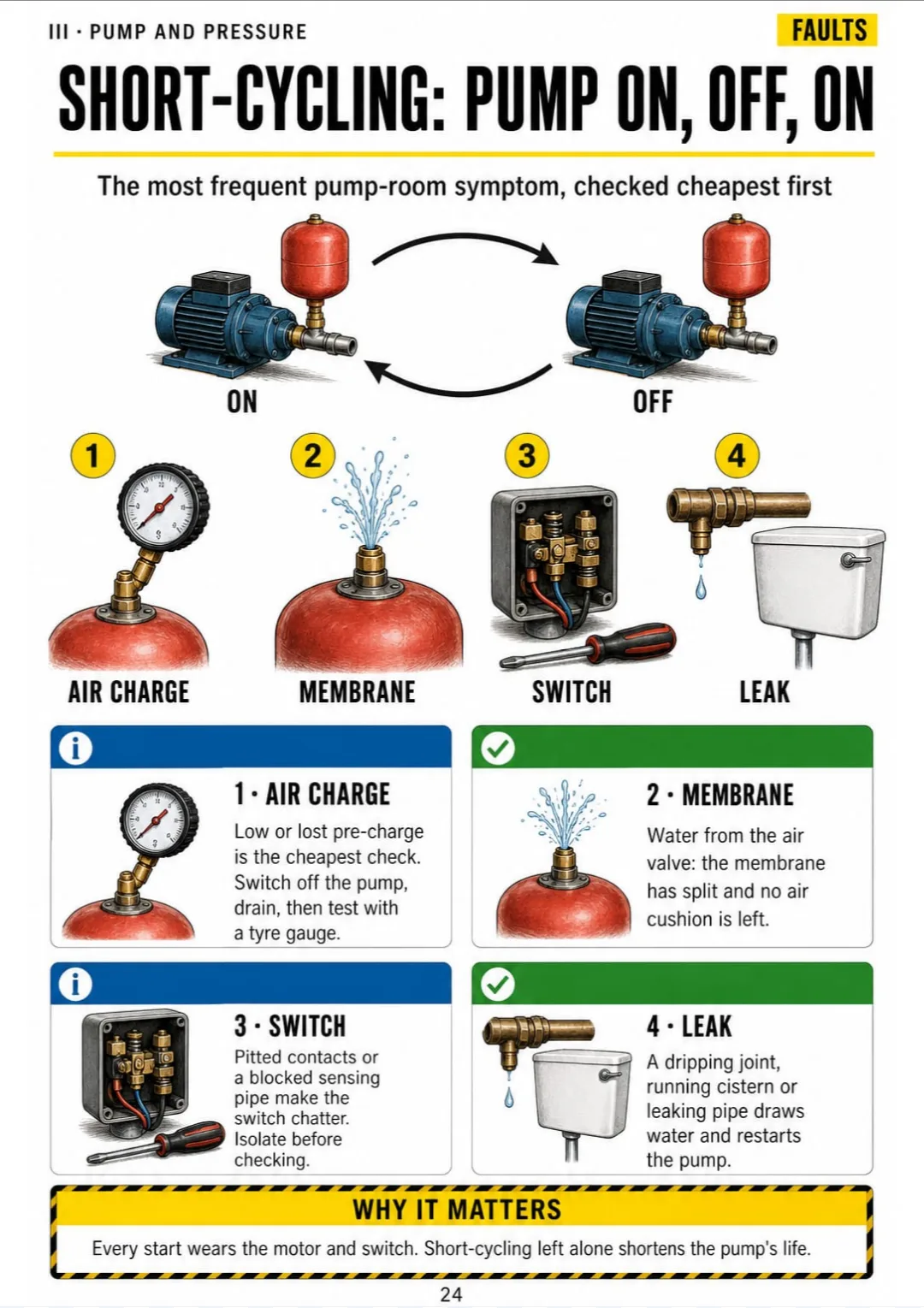
Short-cycling: check air charge, membrane, switch, then leaks
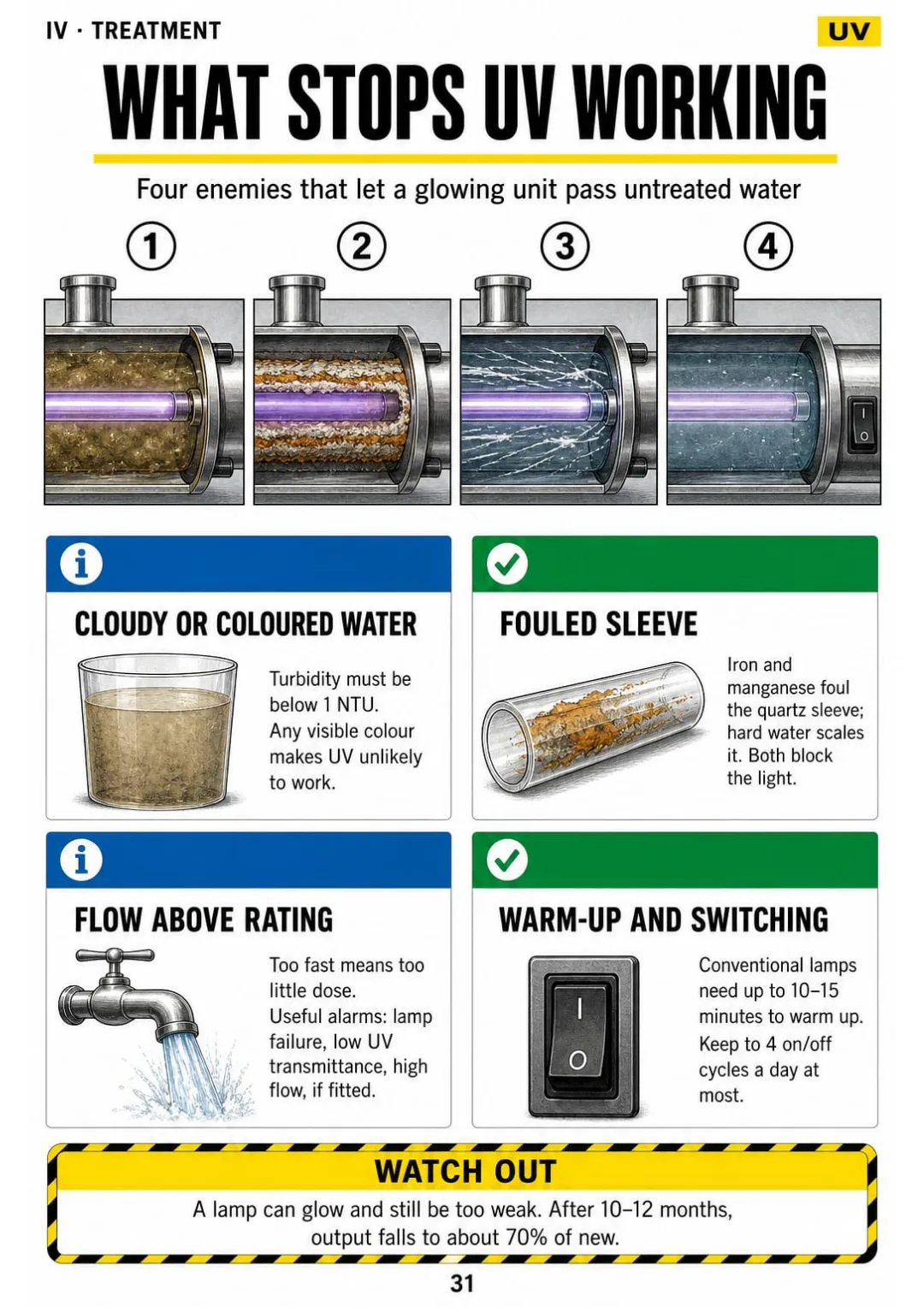
Below 1 NTU, clean sleeve, lamp in date, flow within rating
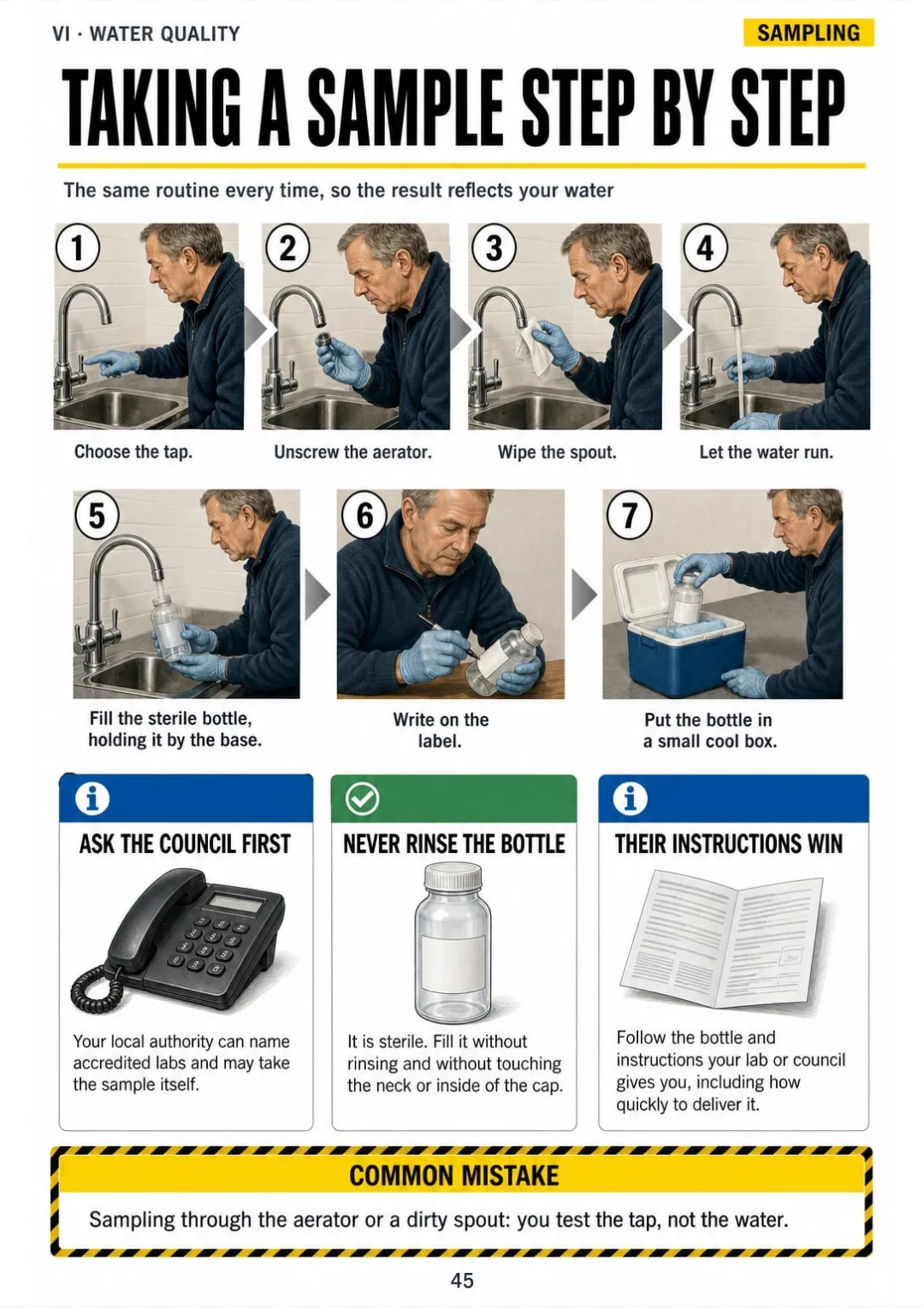
Remove attachments, clean the spout, run, fill without rinsing, keep cool
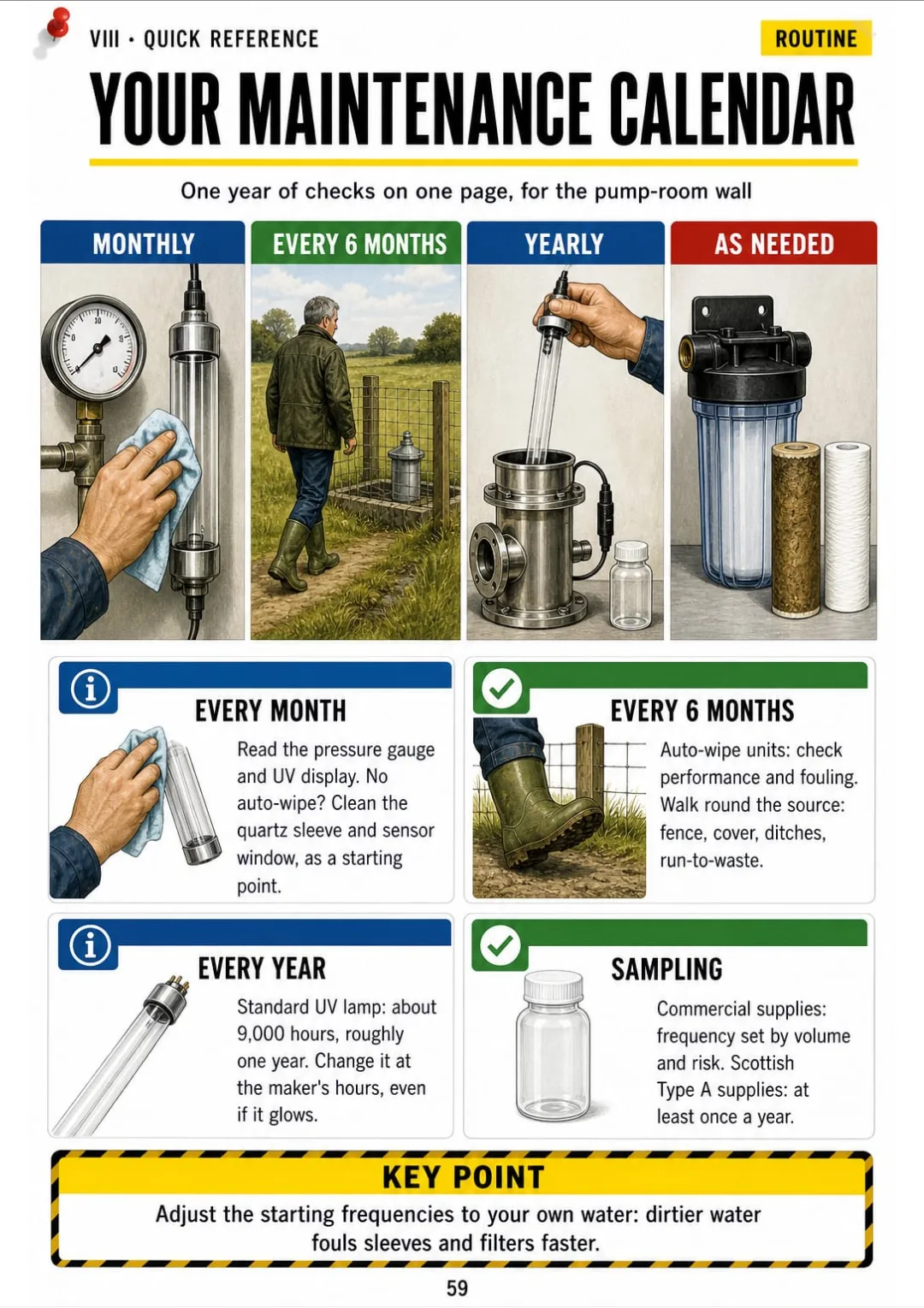
UV sleeve about monthly, source walk-round twice a year, lamp about every 9,000 hours
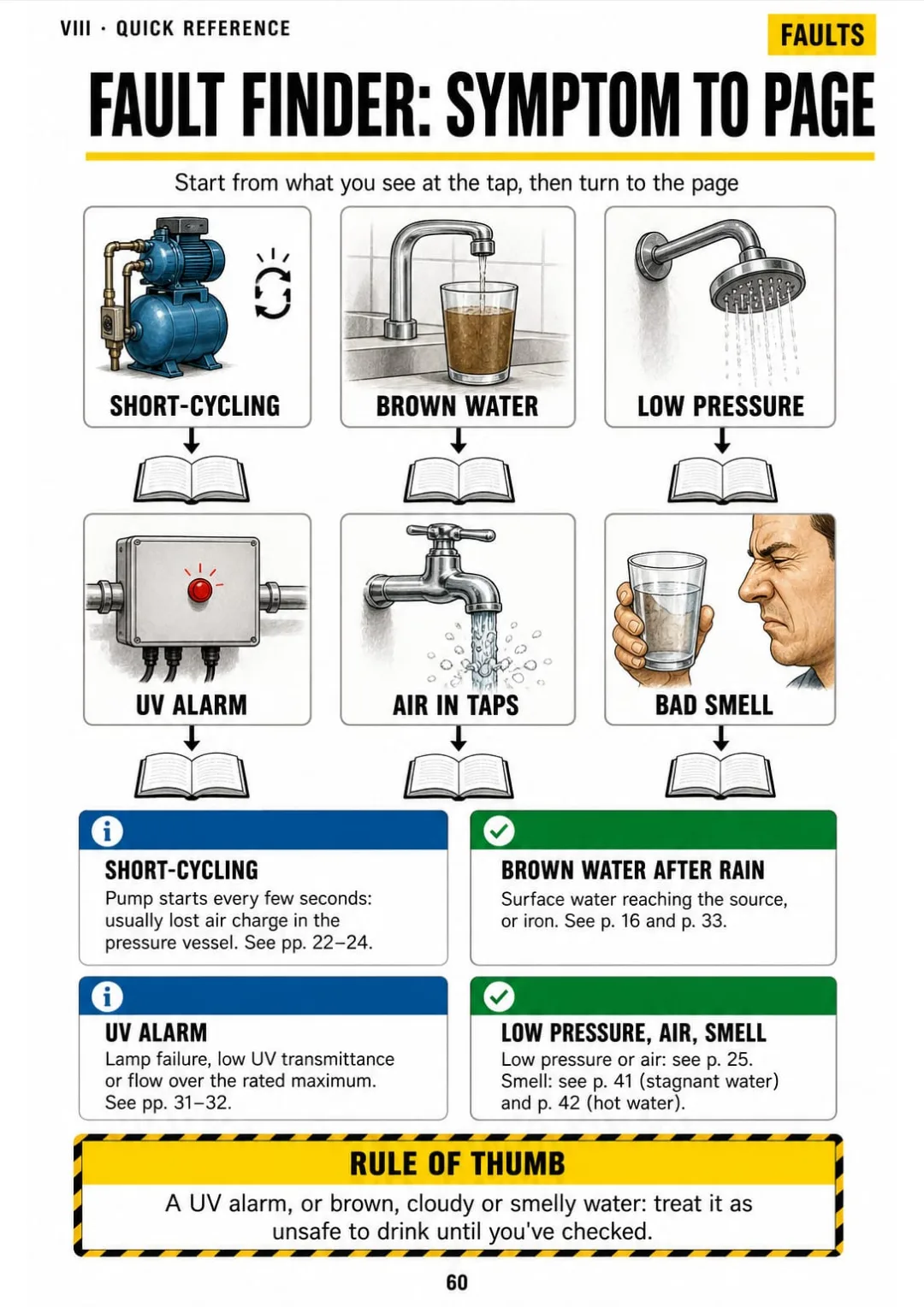
Short-cycling, brown water, low pressure, UV alarm, air, smell: symptom → cause → page

Swipe to see more →

These are real pages from the book. The table of contents is the full one: 8 parts and 60 topics.

You've Read the Manual. It Just Never Drew You the Pump Room.

The pump clicks on and off every few seconds, and after heavy rain the water runs brown. You don't know if it's the filter, the vessel or the borehole itself.

The pump manual covers the pressure vessel in three dense paragraphs, and the council guidance talks about risk, not about your pump room. You still can't say where to look first.

Total head is lift + pipe losses + pressure, with 1 bar ≈ 10 m

In the book, short-cycling is one page. The drawing shows the vessel, its air valve and the pressure switch, with the four checks in order in the box at the side: air charge, membrane, switch, then leaks.

Brown water after rain, sediment filters, what stops UV working, sizing a pump and taking a sample each get their own page, drawn the same way.

You go from symptom to page and know where to look first, before you call anyone out.

COMPARE FOR YOURSELF

The Same Topic, Two Ways to Learn It

THIS
  • The manual: line after line
  • Casing, grout and headworks explained only in words
  • You go out to the borehole still unsure
Where a borehole is present, the arrangement at the top of the bore, usually called the headworks, is there to stop anything at ground level from getting into the source. In practice the lining is brought up clear of the surrounding surface, the gap between the lining and the drilled hole is filled with a sealing material to whatever depth the ground calls for, and any chamber built around it is kept dry, covered, locked and placed so that rainwater runs away from it rather than towards it.
FOR THIS
  • The borehole in one cut-away drawing
  • The heights and the seal in one box
  • You see it and you get it
Borehole headworks at least 0.5 m above ground, with a grout seal around the casing.
CONTENTS

Take a Look at the 8 Parts and 60 Topics

Your supply at a glance, the source, pump and pressure, filters and UV, storage and pipework, water quality and sampling, the law in your nation, and routine and faults: 64 pages, all illustrated.

IYour Supply at a Glance · pp. 5-10
  1. The Whole System on One Page
  2. Borehole, Well or Spring: Which One Do You Have?
  3. Where Your Water Comes From Underground
  4. Units You'll Meet: Bar, Metres of Head, Litres per Minute
  5. The Pump Room Map
  6. What You Can Do Yourself and When to Call Someone
IIThe Source · pp. 11-17
  1. Inside a Borehole: Casing, Grout and Headworks
  2. Inside a Dug Well
  3. Spring Collection Chambers
  4. The Protection Zone Around Your Source
  5. Checking Your Source Twice a Year
  6. Why Water Goes Brown After Rain
  7. Yield: How Much Your Source Can Give
IIIPump and Pressure · pp. 18-26
  1. Submersible vs Surface Pump
  2. Sizing a Pump: Flow and Head
  3. The Pressure Switch: Cut-In and Cut-Out
  4. Adjusting the Pressure Switch Step by Step
  5. The Pressure Vessel and Its Air Charge
  6. Checking the Vessel Pre-Charge
  7. Short-Cycling: When the Pump Starts and Stops Every Few Seconds
  8. Low Pressure and No Water
  9. Dry-Run Protection and Pump Controls
IVTreatment: Filters and UV · pp. 27-36
  1. The Treatment Train in the Right Order
  2. Sediment Filters: Microns Explained
  3. Changing a Filter Cartridge Step by Step
  4. How UV Disinfection Works
  5. What Stops UV Working
  6. Changing the UV Lamp and Cleaning the Sleeve
  7. Iron and Manganese: Orange and Black Stains
  8. Acidic Water, pH and Blue-Green Stains
  9. Hard Water and Softeners
  10. Nitrate, Lead and Other Chemical Concerns
VStorage, Pipework and the Tap · pp. 37-42
  1. Storage Tanks: What a Good One Looks Like
  2. Cleaning and Disinfecting a Storage Tank
  3. Pipework Materials and Backflow
  4. Frost Protection
  5. Stagnant Water and Unused Outlets
  6. Hot Water and Legionella Basics
VIWater Quality and Sampling · pp. 43-49
  1. What the Lab Tests For
  2. E. coli and Coliforms: What a Positive Means
  3. Taking a Sample Step by Step
  4. Reading a Lab Report
  5. After a Failed Result: The First Steps
  6. Shock Chlorination: What It Is For
  7. Radon and Uranium in Some Areas
VIIThe Law in Your Nation · pp. 50-58
  1. Who's Responsible: Owner, User, Local Authority
  2. Types of Supply: Single Dwelling, Shared, Commercial
  3. England: What Applies to You
  4. Wales: What Applies to You
  5. Scotland: Type A and Type B Supplies
  6. Northern Ireland: What Applies to You
  7. The Risk Assessment Visit
  8. Holiday Lets and Rented Homes
  9. Grants, Notices and Getting Help
VIIIRoutine, Faults and Quick Reference · pp. 59-64
  1. Your Maintenance Calendar
  2. Fault Finder: Symptom to Page
  3. The Most Frequent Owner Mistakes
  4. Your Supply Record Sheet
  5. Emergency Card: No Water or Contamination
  6. Glossary at a Glance

One Page, One Topic, All Clear

Think of it this way:

The UV unit starts beeping on a Friday evening and guests arrive tomorrow. You need to know whether it's the lamp, the sleeve or the water itself.

You open the page on what stops UV working. The drawing shows the lamp, the quartz sleeve and the water flowing past, with the four checks in a box: clear water, a clean sleeve, a lamp in date, flow within the rating.

Below 1 NTU, clean sleeve, lamp in date, flow within rating

Same with the pressure switch, the vessel pre-charge, brown water after rain, taking a sample and who's responsible in your nation: each one on its own page.

Private Water Supply Illustrated is 8 parts and 60 topics, all drawn, with a maintenance calendar, a fault finder and an emergency card at the end.

What you see drawn, you don't have to memorize.

What's Inside Private Water Supply Illustrated:

Ipp. 5-10

Your Supply at a Glance

The whole system on one page, which source you have, where the water comes from, bar, metres of head and litres per minute, the pump room map and what you can do yourself.

IIpp. 11-17

The Source

Inside a borehole, a dug well and a spring chamber, the protection zone, the twice-yearly source check, brown water after rain and yield.

IIIpp. 18-26

Pump and Pressure

Submersible or surface pump, sizing, the pressure switch and how to adjust it, the vessel and its pre-charge, short-cycling, low pressure and dry-run protection.

IVpp. 27-36

Treatment: Filters and UV

The treatment train in order, sediment filters and microns, changing a cartridge, how UV works and what stops it, lamp and sleeve, iron, manganese, pH, hardness, nitrate and lead.

Vpp. 37-42

Storage, Pipework and the Tap

What a good storage tank looks like, cleaning and disinfecting it, pipework and backflow, frost protection, unused outlets and Legionella basics.

VIpp. 43-49

Water Quality and Sampling

What the lab tests for, E. coli and coliforms, taking a sample, reading a lab report, the first steps after a failed result, shock chlorination, radon and uranium.

VIIpp. 50-58

The Law in Your Nation

Who's responsible, types of supply, what applies in England, Wales, Scotland and Northern Ireland, the risk assessment visit, holiday lets and rented homes, grants and notices.

VIIIpp. 59-64

Routine, Faults and Quick Reference

Your maintenance calendar, the fault finder, the most frequent owner mistakes, a supply record sheet, an emergency card and a glossary.

At the end of the book: A maintenance calendar, a symptom-to-page fault finder, a supply record sheet and an emergency card.
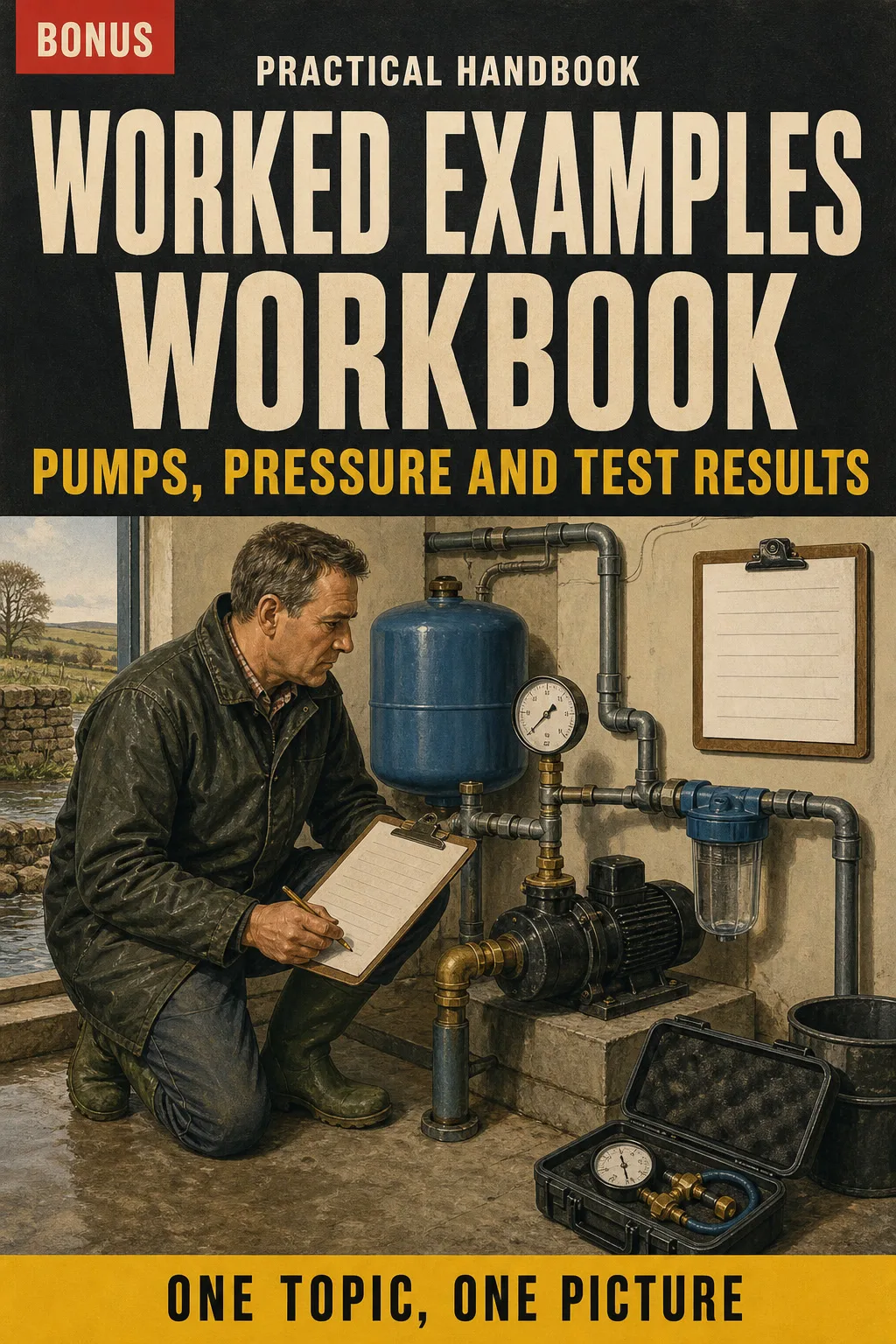

Plus: 2 Free Books

Worked Examples Workbook: Pumps, Pressure and Test Results

BONUS 1: «Worked Examples Workbook: Pumps, Pressure and Test Results»

Value on its own: US$ 17.90

Practise the numbers before you touch the kit: sizing a pump in litres per minute and metres of head, setting cut-in and cut-out in bar, and reading sample lab reports, with the answers drawn out step by step.

Fault-Finding Cards: From Symptom to Likely Cause

BONUS 2: «Fault-Finding Cards: From Symptom to Likely Cause»

Value on its own: US$ 14.90

Short-cycling pump, brown water after rain, low pressure, UV alarm: one printable card per symptom shows where to look first and the most frequent mistakes to avoid.

Private Water Supply Illustrated with 2 Free Books

  • Private Water Supply Illustrated: 64 illustrated pagesUS$ 63
  • BONUS 1: Worked Examples Workbook: Pumps, Pressure and Test ResultsUS$ 17.90
  • BONUS 2: Fault-Finding Cards: From Symptom to Likely CauseUS$ 14.90
  • High-resolution PDF to printIncluded
Total value US$ 95.80
YOUR PRICE:
US$ 27
You save US$ 68.80
YES, I WANT PRIVATE WATER SUPPLY ILLUSTRATED FOR US$ 27

📄 This is a digital PDF book sent to your email: nothing is printed or shipped.

Secure purchaseEncrypted payment30-day guarantee

PDF by email: We email you Private Water Supply Illustrated as a PDF, together with the two free books. It's a single payment: no installments, no extra charges.

Who This Book Is For

You've just moved onto a private supply

You've just moved onto a private supply

You see what's under the garden and in the pump room, part by part, and you know what each one does from day one.

The council visit or the guests are coming

The council visit or the guests are coming

You know what applies in your nation, what gets tested and what to have ready, with every routine in numbered steps.

You've run your supply for years

You've run your supply for years

When the pump short-cycles or the water turns brown, you go from symptom to page and know where to look first.

Everything You Get Today

US$ 95.80US$ 27
YES, I WANT PRIVATE WATER SUPPLY ILLUSTRATED FOR US$ 27

📄 This is a digital PDF book sent to your email: nothing is printed or shipped.

30DAYS
GUARANTEE

30-Day Guarantee

Try Private Water Supply Illustrated for 30 days, bonus books included.

We refund everything if the file won't open, if the book isn't what you see here, if you were charged twice or if the email doesn't arrive. Just email us.

You pay once. No subscriptions.

Frequently Asked Questions

Is it for me if I'm not a plumber or an installer?

Yes. It's written for owners and users of a borehole, well or spring. Every part is drawn and labelled, and every routine is in numbered steps.

Does it cover where I live? England, Wales, Scotland and Northern Ireland have different rules.

Yes. Part 7 sets out what applies in each nation separately: England, Wales, Scotland and Northern Ireland, plus holiday lets and rented homes. The content is based on each nation's private supply regulations and its drinking water regulator's published guidance, checked against the current versions.

Is this official material?

No. It's an independent illustrated book, not affiliated with any regulator or local authority.

Does it replace a lab test, the council's risk assessment or a qualified installer?

No. It's educational material. It doesn't replace testing by an accredited laboratory, the local authority's risk assessment or a qualified installer, and any electrical work should be done by a qualified electrician. It doesn't guarantee safe water or legal compliance.

Are the worked examples and lab reports real test results?

No. They're written for this book so you can practise the numbers and the reading. They aren't results from any real supply or official documents.

When and how does it arrive?

The book and the 2 free books arrive as PDFs by email, to the address you enter at checkout.

Isn't all this free on the council or regulator website?

The guidance is free, and the book is based on it. What it adds is the part the guidance doesn't show: each piece of your pump room drawn, the settings and checks in a box, every routine in numbered steps, and a fault finder from symptom to page. It's a one-off payment, with no subscription.

Can I have it on paper?

Yes. The PDF prints at home, so you can keep it in the pump room.

How does the refund work?

You have 30 days. We refund everything if the file won't open, if the book isn't what you see on this page, if you were charged twice or if the email doesn't arrive: just email us.

Before You Close This Page

No more rereading guidance that doesn't stick.

The pressure switch, the vessel and the UV unit, drawn and clear.

You walk into the pump room knowing where everything is.

Drawings make studying faster.

The book is right below.

One-time payment: US$ 27 · Guarantee: 30 days · PDF by email

YES, I WANT PRIVATE WATER SUPPLY ILLUSTRATED FOR US$ 27

📄 This is a digital PDF book sent to your email: nothing is printed or shipped.